Most people walk into The Wizard of Oz at Sphere expecting the spectacle. And yes — the enhanced AI technology, the enormous screen, the haptics built into the seats, the wind, the fog, the drones, the entire technological arsenal — all of it delivers. With more than 160,000 speakers embedded throughout the venue, Sphere surrounds the audience with a level of immersion no traditional theater can match.
But the real surprise isn’t the technology. It’s the music, heard with a clarity and scale it never had until David Newman and an extraordinary live orchestra re‑recorded the score for Sphere’s state‑of‑the‑art spatial audio system.
“Over the Rainbow” is a poignant moment — Judy Garland’s voice fills the enormous venue with a purity and emotional weight that brings audiences to tears. But what also emerges in this environment is something unexpected: the lesser‑known motifs — the cues never designed to be showstoppers — suddenly rise to the surface. Inside Sphere, these subtle musical ideas become some of the most powerful moments in the entire experience.
Herbert Stothart’s score has always been the emotional backbone of The Wizard of Oz. But in the 1939 film, many of his most intricate cues were intentionally understated — transitional, psychological, atmospheric. They were meant to be felt more than noticed.
Sphere changes that.
Sphere Makes the Subtle Impossible to Ignore
The venue’s spatial audio system doesn’t just make the score louder; it makes it dimensional. Notes that once lived in the background now move through the venue. Harmonic shifts that once flickered now wrap around the room. Stothart’s underscoring becomes something you embody.
As the film moves deeper into Oz, Sphere begins revealing the full power of Stothart’s subtler writing.
You hear it in the nervous strings that accompany Dorothy’s first moments in Munchkinland. You hear it in the textures that bridge Kansas and Oz. Tiny harmonic shifts that once hid quietly now bloom into atmospheric worlds.
The result is that these so‑called “lesser known” cues suddenly hit with unexpected force. They become the emotional engine of the entire experience.
The Cyclone Sequence Explodes
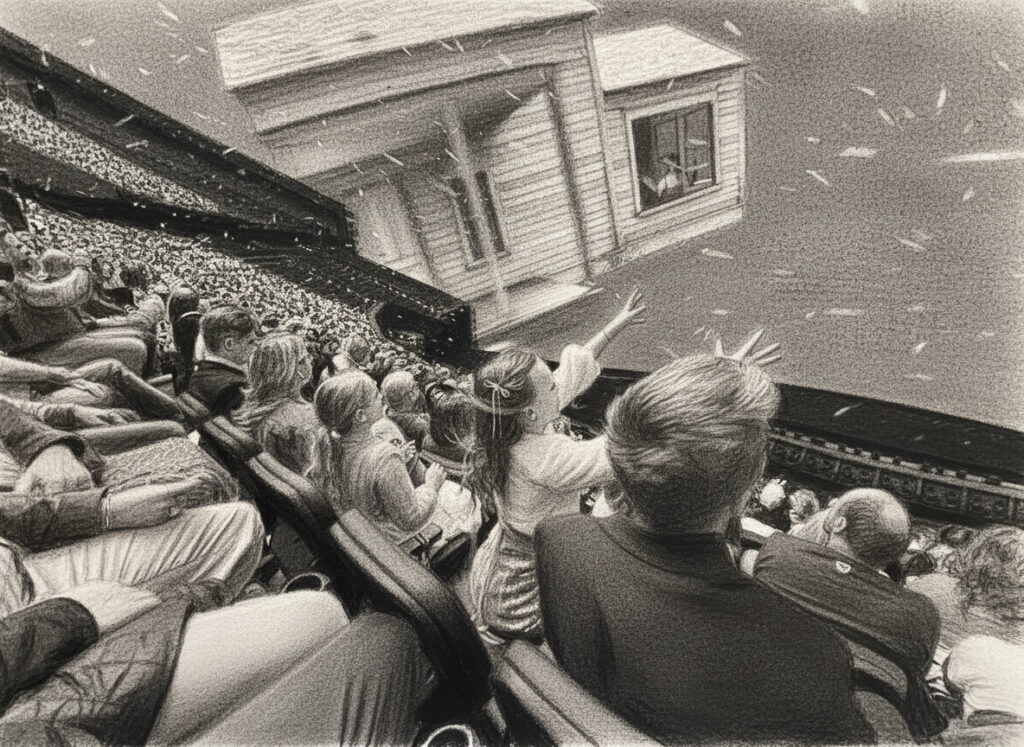
The tornado scene is the most obvious example. Sphere turns it into a full‑body immersive event: wind, fog, shaking seats, debris, lightning. But the real transformation comes from the score.
Stothart’s “Cyclone” cue — with contributions from arranger George Bassman — was always built on tension: twisted motifs, frantic orchestration, a sense of being pulled off balance. In Sphere, those musical ideas expand into the room itself. They don’t just accompany the storm; they shape it. And when the music cuts to silence as Dorothy’s house lands, the entire audience exhales.
It’s a striking reminder that the emotional impact isn’t coming from the movie alone.
The Quieter Cues Hit Even Harder
Once the audience has lived through the tornado, Sphere continues revealing the depth of Stothart’s subtler writing.
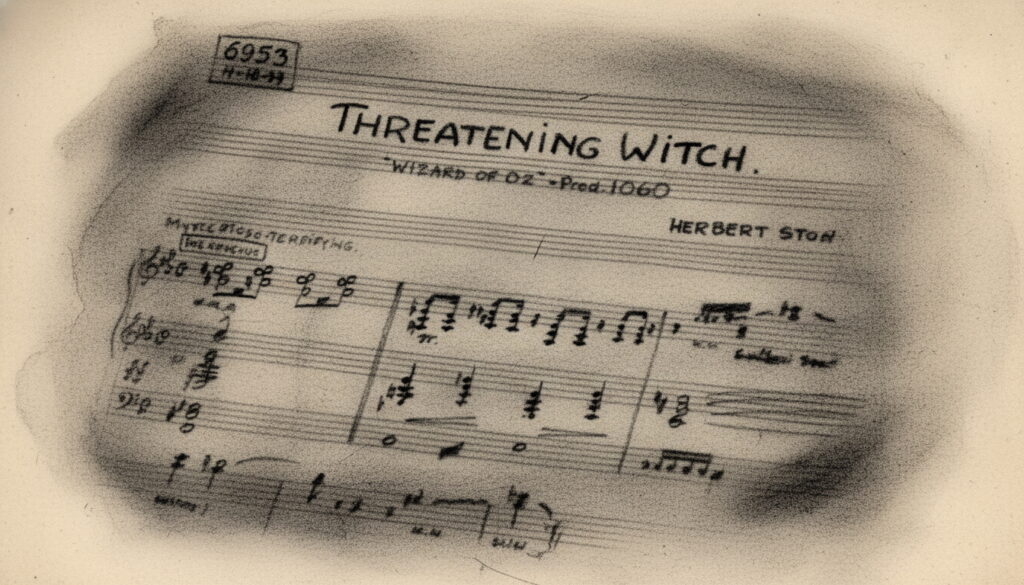
Miss Gulch’s threatening witch motif — an ominous cue in the film — now sweeps across the room with a presence that feels almost physical. What was once a character cue becomes a full‑body signal of dread.
The Poppy Field music, with its dreamy, narcotic harmonies, expands into the venue’s spatial field. The effect is disorienting in the best way — like a musical haze that fills the air.
A New Appreciation for Craft
These cues were never meant to dominate the film. Sphere gives them the space — literally — to expand.
One of the unexpected outcomes of the Sphere adaptation is that it reveals just how meticulously Stothart built the film’s emotional architecture. The immersive environment doesn’t overshadow his work — it exposes it. It shows how much of the film’s psychological storytelling lives in the cues most people never think to name.
And for me, that revelation is personal. All my life, people have asked whether my grandfather wrote “Over the Rainbow.” I always answered politely — no, that was the great Harold Arlen and Yip Harburg. But today, after seeing The Wizard of Oz at Sphere, I can say something I’ve never been able to say before: my grandfather wrote “Cyclone,” and Miss Gulch’s motif, and the Poppy Field sequence — and I can be certain that everyone in the room will know exactly what I mean.
That is a complete reversal of how this music has lived in the culture for 85 years. The cues that once slipped by unnoticed now land with new clarity. The subtle ideas — the psychological shadows, the harmonic shivers, the tiny gestures that shape Dorothy’s world — suddenly feel like the most powerful moments in the entire experience.
Sphere doesn’t modernize Stothart’s score; it reveals it. It lets audiences hear the film the way a composer hears it, from the inside out. And that, in itself, is a reason to experience The Wizard of Oz in this new venue. You go for the spectacle, but you leave with a deeper understanding of the music — and with a newfound appreciation for the musical genius that’s been there all along.