Early Life & Education
Herbert Stothart was born on September 11, 1885, in Milwaukee, Wisconsin, to a family of Scottish and German ancestry. Originally planning to become a history teacher, he discovered a deeper calling to music while singing in school choirs and later at the University of Wisconsin–Madison. There, he composed and conducted original musicals for the Haresfoot Dramatic Club — early experiments in theatrical storytelling through music.
The success of one student work, Manicure Shop, which was later staged professionally in Chicago, led him to pursue further musical study in Europe. The classical traditions he absorbed abroad would later shape his Hollywood scores.
Broadway Years
Returning to the United States, Stothart began composing for vaudeville and musical theatre. In 1914, Oscar Hammerstein II hired him as musical director for the Rudolf Friml operetta High Jinks, launching a decade of steady Broadway work.
Between 1917 and the mid‑1920s, he collaborated with many of the era’s leading composers and lyricists — Rudolf Friml, Vincent Youmans, George Gershwin, Sigmund Romberg, and Otto Harbach — contributing to a string of successful productions.
His first major hit came with Rose Marie (1924), co‑written with Friml, which ran for 557 performances. He followed with Song of the Flame, co‑composed with Gershwin, further establishing his reputation as a versatile and sophisticated musical dramatist.
Transition to Hollywood
In 1929, as talking pictures transformed the film industry, Louis B. Mayer recruited Stothart to join Metro‑Goldwyn‑Mayer. The move marked the beginning of a twenty‑year career that would make him one of Hollywood’s most prolific and influential composers.
MGM Years
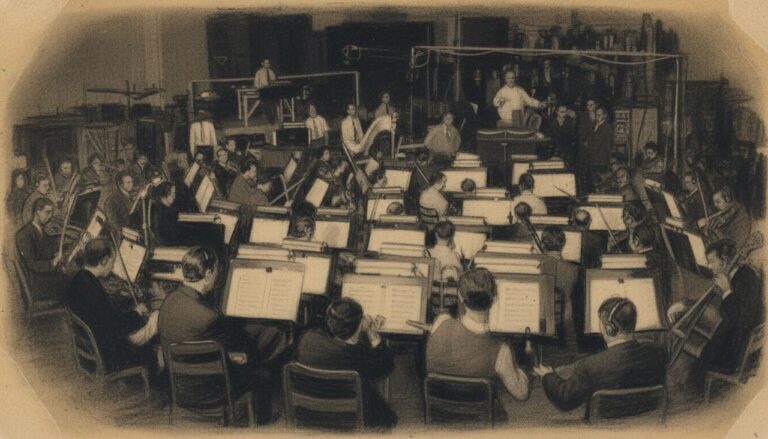
At MGM, Stothart quickly became central to the studio’s prestige output. He scored more than 100 films, working closely with directors, producers, and the studio’s legendary music department. His style — melodic, emotionally precise, and shaped by classical leitmotif — became a defining element of MGM’s Golden Age.
One of the most enduring is “I Wanna Be Loved by You,” written with Bert Kalmar and Harry Ruby. First introduced in the late 1920s for the Betty Boop animated shorts, the song became part of the American musical imagination.
Decades later, Marilyn Monroe immortalized it in Some Like It Hot (1959), transforming it into one of the most recognizable torch songs of the 20th century.
Stothart composed for many of MGM’s most ambitious literary and historical adaptations, including:
- Mutiny on the Bounty (1935)
- Anna Karenina (1935)
- The Good Earth (1937)
- Pride and Prejudice (1940)
- Random Harvest (1942)
His most celebrated achievement came with The Wizard of Oz (1939), for which he received the Academy Award for Best Original Score.
Personal Life & Family
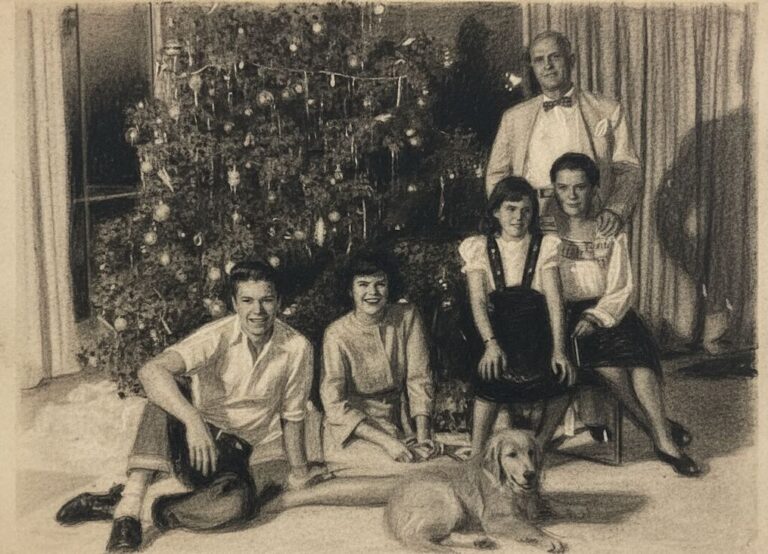
Herbert Stothart’s personal and professional life evolved in New York City during his early Broadway years, when he met Dorothy Wolfe, an actress from a theatrical family. The two married and had a child, Carol Stothart, born on March 28, 1920. However, their marriage was brief and marked by tragedy: Dorothy died young, leaving Herbert a widower with an infant daughter.
Herbert grew close to Dorothy’s younger sister, Mary Wolfe, also an artist and actress. They later married and built a robust life together that blended artistic sensibility with the demands of his rapidly rising career.
As Stothart’s Broadway success grew and Hollywood entered the era of sound, the couple relocated to Los Angeles in 1929, when Herbert was recruited to join MGM. They settled on the West Coast early that year, establishing a home and beginning the next chapter of their lives.
Herbert and Mary had two children: Herbert Stothart II, born November 23, 1929, and Constance Stothart, born September 23, 1935, both in Santa Monica, California.
Life at home unfolded alongside the intensity of his studio career. Stothart worked at an unrelenting pace, often under pressure to deliver a continuous stream of scores. His son, Herbert II, remembered treasured family outings — train trips to San Francisco for football games, and days at the beach — but also recalled that his father was frequently absorbed in the demands of composing and MGM’s relentless production schedule.
Later Years & Death
In 1947, while visiting Scotland, Stothart suffered a heart attack. He later composed Heart Attack: A Symphonic Poem based on the experience. He continued working until his death in 1949 at age 63. He was posthumously inducted into the Songwriters Hall of Fame. Stothart is buried at Forest Lawn Memorial Park in Glendale, California, one of the most historically significant cemeteries in Los Angeles and the resting place of many figures from Hollywood’s Golden Age.
Legacy
Herbert Stothart’s influence extends far beyond the films he scored. His work helped define the sound of early Hollywood, bridging European classical traditions with the emerging language of American cinema. The 2025 Sphere reconstruction of The Wizard of Oz introduced his music to a new generation, while ongoing scholarship and archival work continue to deepen appreciation for his contributions.
